

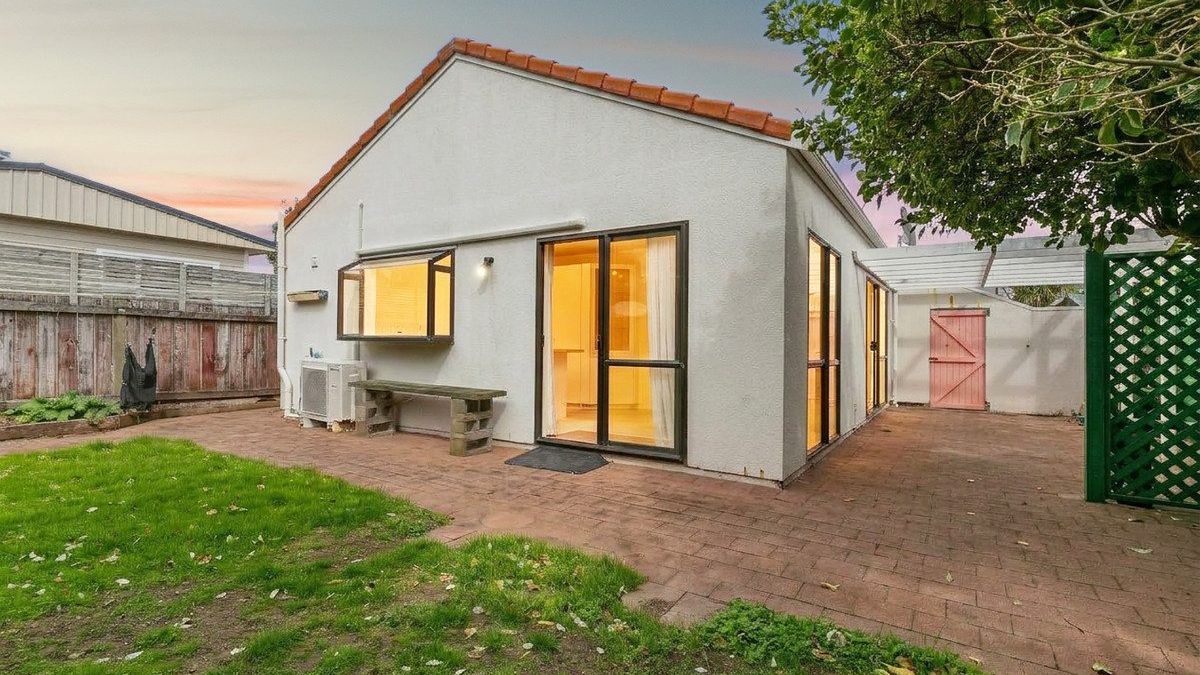
The house is perfect. Three bedrooms, sun in the afternoon, a deck off the lounge that sold it the second you walked through. Your finance is approved, your lawyer pulls the title, and someone says the word "defective". The whole thing stops.
The deck isn't on the flats plan. Nobody added it when it went up in 1998, and now your bank wants to know why it's funding a house that, on paper, doesn't include the best part of it. This happens in Auckland constantly and almost nobody writes about it properly. Here's what a cross-lease is, what the flats plan does, what makes a title defective, what your bank checks, and how much it costs to fix it.
The short answer
A cross-lease means you own an undivided share of the freehold land as a tenant in common with the other owners, and you lease your flat back from all of the owners including yourself.
The flats plan is the whole ballgame. It shows the footprint each owner has the right to occupy. If the buildings on the ground don't match it, the title is "defective".
A deck, conservatory, garage, carport or extension added after the plan was created, and never recorded on it, makes the title defective.
Banks and insurers are less likely to lend on or insure a property with a defective title. That's a finance problem, not just a legal one.
Auckland has 100,148 cross-lease titles, which is 18% of all Auckland titles and 47% of New Zealand's total, per Auckland Council technical report TR2017/025, using data as at 15 March 2016.
What is a cross-lease, actually?
Two interests in one property at the same time, which is why it confuses everyone.
Settled.govt.nz, the government's buying guide, puts it like this: "If you hold a cross lease you own two interests in the property: A share of the freehold title in common with the other cross leaseholders. A leasehold interest in the particular area and building that you occupy."
Let’s unpack that. You and the other owners jointly own the land as tenants in common, each holding an undivided share, so on a three-flat site you own a third of it and no part is exclusively yours. Then you lease your flat back from all the owners, which includes leasing it from yourself, usually on a 999 year lease.
Cross-leases were a workaround. Subdividing used to be slow and expensive, so from the 1960s people used a lease to fit two or three homes onto one title. It worked. It also created a title type that generates arguments for decades.
How is it different from freehold, unit title and leasehold?
Four ownership types, and lenders treat all four differently.
Freehold (fee simple). You own the land and everything on it, outright, on your own title. The most common type in New Zealand and the one every lender likes.
Cross-lease. Shared land title plus a lease of your flat. Your neighbours are effectively your landlords and you are theirs, so consent is needed for things freehold owners never think about.
Unit title. You own your unit plus an undivided share of the common property, run by a body corporate with levies and a maintenance plan. Auckland has 75,376 unit titles, about 13% of the total (Auckland Council TR2017/025).
Leasehold. You own the building but lease the land, with ground rent and periodic reviews. Lenders often want 50% deposit, because they want the mortgage repaid before the lease renews.
Cross-lease sits in the middle. It's rarely a decline on its own. It's a title that has to be checked, and the buyer needs to be aware of how the cross-lease can impact them if they proceed with the purchase.
What is the flats plan, and why does everything hinge on it?
The flats plan is the diagram attached to the title showing the footprint of each building, plus any area one owner has exclusive right to use, like a courtyard or a car pad.
Settled.govt.nz describes it as "a plan showing the footprint of the building you are entitled to occupy, called the flats plan (older cross lease titles may not supply one)." That parenthetical matters. A genuinely old cross-lease may have no usable plan at all, which is its own problem.
Here's the part that catches buyers. Your lease gives you the right to occupy a building of a particular size in a particular position. Push that footprint out and you're occupying something the lease doesn't describe. That's a defective title.
The plan is the definition of what you're buying.
What makes a cross-lease title "defective"?
Any building work that altered a footprint and was never recorded on the plan. It's very common, because for decades nobody bothered.
The usual offenders:
A deck added off the lounge or a bedroom.
A conservatory or an enclosed porch.
A garage or carport, especially freestanding ones from the 1980s and 90s.
An extension, even a modest one with full building consent.
A large shed or sleepout, which people almost never think of as a building.
Note the trap. Building consent and an updated flats plan are two separate things. A previous owner could have done everything right with the council and still left the title defective, because updating the plan needs a survey, the other owners' agreement and new lease documents. Plenty of people have skipped this process. .
The other flavour of defect is use. Where a garden or parking area has been used by one flat for years without the plan granting that right, you have an informal arrangement a future owner can end. Something to investigate when looking at a cross-lease property.
Will a bank actually lend on a cross-lease?
Usually yes. It gets difficult when the title is defective.
Cross-lease is mainstream Auckland lending. A tidy cross-lease with a matching flats plan is generally treated much like freehold.
A defective title is a different conversation. As the industry summary puts it, "banks and insurance companies are less likely to lend money or insure a property with a defective title" (Opes Partners, updated 30 April 2024). In practice:
Your lender may make correcting the defect a condition of the loan, before or shortly after settlement.
The valuation may come back lower, or with the defect called out, which moves your loan-to-value ratio the wrong way.
Your insurer may decline to cover a structure that isn't on the plan, and no insurance means no mortgage.
At a low deposit, tolerance drops sharply. A 90% or 95% application with a defective title is a much harder mortgage application than an 80% one.
That last point hurts first home buyers most, because it stacks two risks the lender dislikes.
Mortgage pre-approval · First home buyer specialists
How common is this in Auckland?
Common enough that ignoring it isn't an option. Auckland is New Zealand's cross-lease capital by a distance.
The authoritative count comes from Auckland Council technical report TR2017/025, "Arrested (re)development: A study of cross lease and unit titles in Auckland", published October 2017 using data as at 15 March 2016:
100,148 cross-lease titles in Auckland.
That's 18% of all Auckland titles.
And 47% of New Zealand's entire cross-lease stock sits in Auckland.
Be clear on the age of that data. It's a 2016 snapshot and the most recent authoritative breakdown available. Some titles have been converted to fee simple since, so the true current number is probably a little lower. The pattern hasn't moved.
Six Auckland local boards each hold more than 8,000 cross-lease titles: Albert-Eden, Devonport-Takapuna, Hibiscus and Bays, Howick, Kaipātiki and Ōrākei (same source). Three of the six are on the North Shore, which holds the largest concentration in the country, a legacy of the 1950s and 60s subdivision wave after the Auckland Harbour Bridge.
Howick and Ōrākei carry the eastern load, which is why East Auckland's 1970s to 90s brick-and-tile stock, the kind that later grew decks and conservatories, throws up so many.
Mortgage broker North Shore · Mortgage broker East Auckland
What does it cost to fix?
More than a set of documents, less than a renovation. In Auckland, converting a two-lot cross-lease to fee simple runs about $38,000 to $40,000 (Opes Partners, updated 30 April 2024).
That covers the surveyor, the council application, the legal work and the new titles. Add owners and both the cost and the difficulty climb, because everyone has to agree and pay a share. One holdout neighbour ends it.
The counterweight is the price. The same source reports conversion to fee simple has added 17% to 18% to what some Auckland properties are worth. Against a $940,000 Auckland median (REINZ, July 2026, released 13 August 2026), that dwarfs the conversion cost. It varies by property, but it's why converting is worth raising with the vendor rather than walking away.
There's a cheaper middle option. Where the only problem is an unrecorded deck or garage, you can update the flats plan and reissue the leases without going to fee simple. Usually the property lawyer will be able to give you guidance on the costing.
What should I check?
Check these 5 things with the property lawyer.
Get the record of title and the flats plan. Both, not just the title. A cross-lease title without a legible flats plan is a warning in itself.
Walk the property with the plan in your hand. Check the deck against the paper. Then the garage, the carport, the conservatory, the shed and any extension.
Read the lease covenants. Alterations, exterior colours, pets, subletting, parking, whose job the roof is. Some are startlingly restrictive.
Check who has to consent to what. Find out how many owners there are and whether any of them is unreachable, overseas or a trust with no active trustees.
Ask your lawyer specifically about the flats plan. Not "is the title okay". Ask whether the buildings match the plan and, if not, what it takes to fix. General title advice isn’t sufficient.
Do all five inside your due diligence period. Do not use ChatGPT for your answers, you need to have a good property lawyer that can guide you through this.
I've found a defect and I love the house. Now what?
Don't panic and don't walk yet. A defective cross-lease is a negotiation, not automatically a dead deal.
Price it and put it on the vendor. Get an indicative quote from a surveyor, then either ask the vendor to correct the plan before settlement or ask for a price reduction covering the work plus a margin for the hassle. Vendors who've heard this from three buyers in a row are more willing than you'd expect.
Talk to your lender early, through us. Some proceed with the defect noted and a condition attached, others want it resolved first, and the answer shifts with your deposit size and the bank you have the approval with.
Get the insurer's position in writing. If the unrecorded structure can't be insured, the lender's answer is no regardless of everything else.
Know when to walk. If the other owners won't cooperate, or the defect is a whole extension rather than a deck, the fix can stall for years. A house you can't finance cleanly and can't easily sell is a problem you're buying, not solving.
What to do next
Send us the address before you make an offer. We'll flag the title type and what it means for your deposit and your lender.
Get your pre-approval sorted. Having a pre-approval can work in your favour if it comes to negotiating.
Brief your lawyer with the right questions. The flats plan, specifically.
Budget the fix if there is one. About $38,000 to $40,000 for a two-lot conversion, less for a plan update alone.
In most cases our advice costs you nothing. We're paid by the lender you choose, and we're paid much the same either way, so the recommendation is about the loan rather than the commission. In a small number of situations a fee applies, and we'll always tell you before any work begins. It's all set out in our disclosure statement.
Call us on 022 305 5696 or send your details through and we'll come back to you the same working day. Know where you stand before you make an offer.
We're available 8am to 8pm, seven days. No obligation, and nothing gets submitted to a lender without your say-so. Here to give you guidance and educate you through the process of buying property.